Ga naar hoofdinhoud
Installation of warehouse equipment
MO-FR: 8:00 - 16:30

Pushback Racking in Belgium

Leave
a request
and we will calculate the final price

Pushback racking is a high-density LIFO storage system for Belgian warehouses. Pallets are stored 2 to 5 deep per lane and flow automatically to the picking face when the front pallet is removed — giving you compact, high-capacity storage without sacrificing product accessibility. MagazijnService.be supplies and installs pushback racking across Belgium. Free site visit and quote within 24 hours.

Pushback_stellingen

PUSHBACK RACKING

Compact storage system for pallets that increases warehouse capacity and reduces processing times.

Pushback system: grouped storage to save time and space

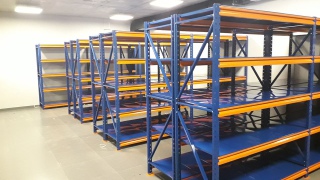
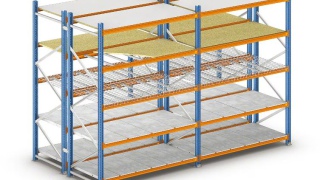
Pushback racking systems are a high-density storage solution where multiple pallets can be stored in depth, and a different SKU can be used for each channel. The load is grouped and pushed along slightly inclined channels.

The pushback system is extremely flexible because forklifts do not need to enter the racking, and the stored goods are accessed from a single aisle. The system is based on LIFO (Last In, First Out): the last pallet loaded is the first one retrieved.

ADVANTAGES OF PUSHBACK RACKING

  • Space saving: the removal of aisles allows better utilization of available space, increasing storage capacity.Pushback_stellingen
  • Time saving: forklifts do not need to maneuver between racks, and work is done from a single aisle, significantly speeding up loading and unloading.
  • Multiple SKUs: a different SKU can be stored in each storage channel, allowing for the storage of many more types of products.
  • Low and high temperatures: the guides are suitable for temperatures ranging from -30 ºC to +40 ºC.
  • Safety: locks, stops, pallet centering devices, and other elements make it easy and safe to load and unload pallets.
  • Low maintenance: these racks require minimal maintenance, and their components are very strong and durable.

The system is very practical, no aisles are required, and storage tasks are completed faster” — Marina Xicola, Operations Director, SHAD (Barcelona, Spain)


PUSHBACK STORAGE SYSTEM APPLICATIONS

Highly flexible solution adaptable to various types of warehouses

Pushback racking is the perfect system for companies with a medium turnover rate of palletized goods or with a small variety of SKUs and few pallets per SKU. It is also an ideal solution for warehouses that need to optimize available space.

Warehouses with medium turnover rates

Pushback racking is ideal for palletized loads with a medium turnover rate and two or more pallets per SKU and LIFO.

Batch storage

Each channel is separate, allowing SKUs to be distinguished and batch storage to be implemented.

Cold storage

Recommended for refrigerated warehouses: the volume to be cooled and thus energy consumption is minimized.

Temporary buffer for finished orders

These racks can be used in temporary storage areas for finished orders.

Pushback_stellingen3 Pushback stellingen4 Pushback stellingen5 Pushback_stellingen6
FAQ
Question - answer
What are pushback propositions?
Pushback racks are compact structures without intermediate aisles and in which up to four pallets per channel can be stored. This increases warehouse capacity in the smallest possible floor space. The pallets are placed on guides or rollers that stand on slightly inclined rails. From there, they are pushed forward. Hence the name "push back": the forklift pushes back the pallets already in the rack when a new pallet is put down. The front part of the rack is the lowest located. When the first pallet is removed, the back pallets move forward one position by gravity. Thus, there is always a pallet available at the entrance to the channel. Since these racks have one aisle for loading and unloading, they work on the LIFO principle: the last pallet put down is taken out first.
When are pushback racks recommended?
The push back system is compatible with any type of product. However, there are certain applications that are particularly suitable. For example, it is a perfect solution for storing goods on pallets with a medium turnover rate and two or more pallets per SKU, which are managed by the LIFO method. Pushback pallet racking is also often used in warehouses with few SKUs and few pallets per SKU. Or for storage of products with high turnover rates because loading and unloading is fast. Like any high-density storage solution, it is also a perfect fit for companies that need to optimize their available area to increase warehouse capacity.
What are the differences between flow-through racks and pushback racks?
The main difference between the two systems lies in inventory management. Pushback racking operates according to LIFO (Last In, First Out), where the last-stored pallet is taken out first, since the goods are accessed from a single aisle. Roll-through racks, on the other hand, have a loading and unloading aisle. So here they work according to FIFO (First In, First Out): the first pallet to come in is the first to go out.
Are there any drawbacks to pushback racking?
Pushback racking is a very simple storage system with grouping, where a different SKU can be housed in each channel. Forklifts do not need to drive between the racks, as they drop off and retrieve goods in the aisle. This reduces maneuvering times and increases operational safety. However, these racks are limited by channel depth and height. The system can be equipped with up to four and six pallets deep (depending on the variant chosen, guides or rollers) and with a maximum height of 7.5 m. If greater capacity and height are required, Mecalux also has other high-density storage solutions, such as the Pallet Shuttle system, whose channels can be more than 40 m deep, for example.
How deep is each channel?
Pushback racks that use guide rails can hold up to four pallets per channel. In the roller-based variant, the maximum number of pallets per channel is six or more, depending on the weight of the pallets.
What is the maximum height of pushback racking?
Mecalux has set the maximum height of pushback racking for pallets at 7.5 m. This is provided that the right means of transport is used, as the height is determined by the forklifts used.
How wide is each channel?
The width of the channel or beams is equal to the dimension at the front of the pallets including the load plus 150 mm (75 mm on each side).
How are pallets placed in pushback racks?
In the variant with guides and rails, the forklift picks up the pallets perpendicular to the lower slats so that the pallets rest transversely on the guides and rails. They are placed with the widest side in the rack. In the version with rollers, the pallets are picked up on the narrow side so that the lower slats rest perpendicular to the rollers and can be moved easily.
How are SKUs distributed in a push-back proposition?
In a push-back rack, each storage channel is dedicated to one SKU. Since the channels are managed independently, each channel can hold several SKUs. This is an advantage over drive-in racks or drive-through racks, where all channels in the same storage lane are used for the same SKU.
What type of forklifts are suitable with the pushback system?
In theory, any model of forklift can work with push back racks. Keep the following in mind, though. For example, the rigidity and resistance to push forces of the forklift determine how many pallets can be placed in each channel. After all, the forklift must be able to develop the necessary force to push forward the pallets stored in the channel when a new pallet is introduced. The higher the height, the greater the load on the forklift and the more the parts will wear out. Therefore, it becomes more difficult to control the forklift when extracting the pallets.
Leave
a request
and we will calculate the final price

Optimize your warehouse space?

Custom warehouse racking for every business in Antwerp and throughout Belgium. Fast delivery and professional installation by certified specialists.

This site uses cookies to store data. By continuing to use the site, you agree to work with these files. Privacy Policy.